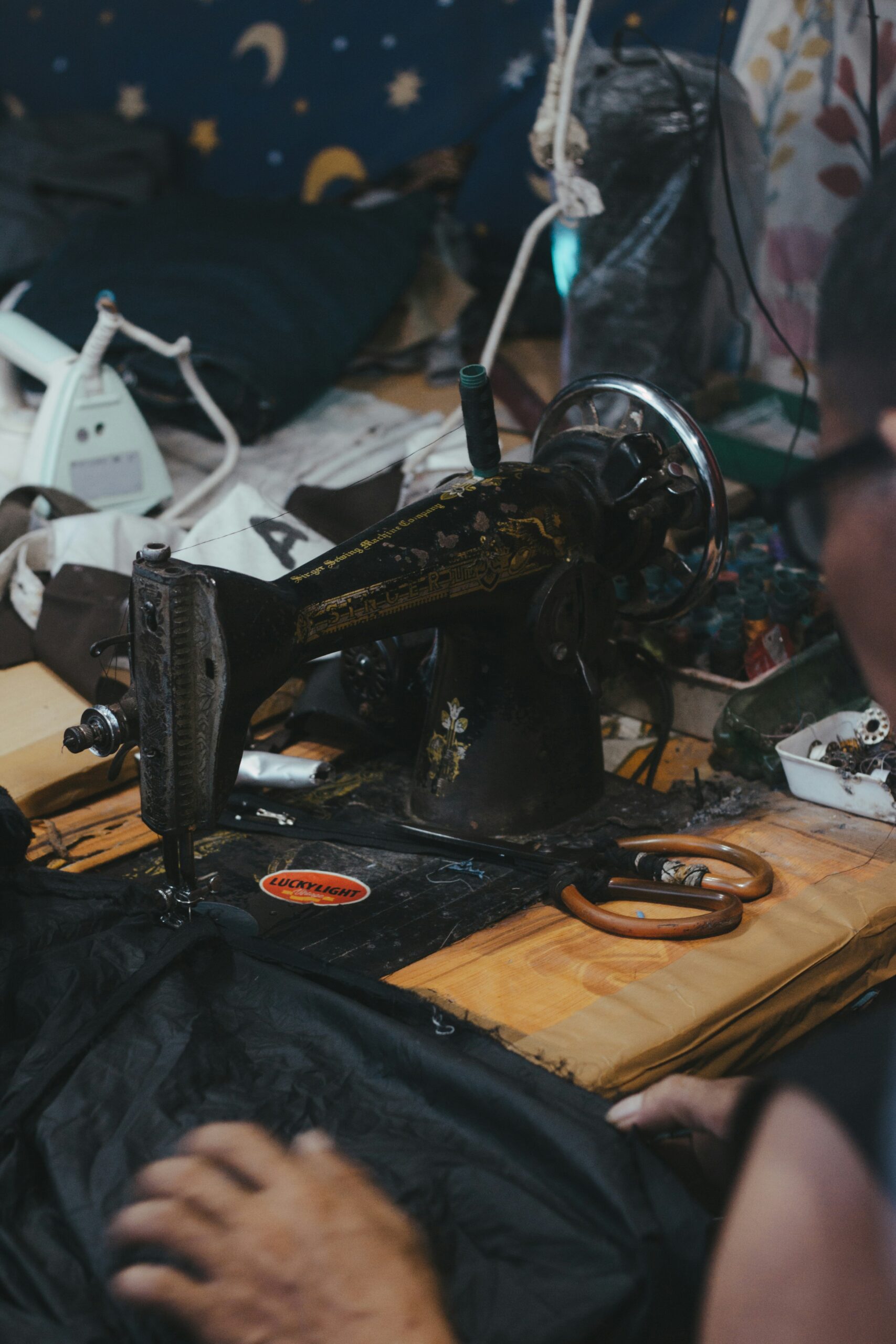
Vale do Ave, Portugal
One factory, on purpose
Spreading production across several mills would be cheaper. It would also mean we could not keep track of any of them properly. So everything is knitted and dyed at a single family-run mill in the Vale do Ave, north of Porto, and we visit twice a year.
Why the Ave valley
Northern Portugal has been a textile region for well over a century, which means the skills are local rather than imported. The people operating the knitting machines learned from people who did the same job, and that is not something you can set up from scratch by building a factory somewhere cheaper.
It also means short distances. The spinner, the knitter, the dyehouse and the cut-and-sew are within an hour of each other. Cloth is not flown between continents at each stage, which does more for the footprint of a garment than most of the claims you will read elsewhere.
What happens there
- Knitting. Jersey for the tees at 185 and 200gsm, loopback for the sweatshirts at 380. Circular knitting machines, run slower than the industry norm, which costs time and produces a more even cloth.
- Dyeing. Reactive dyes, OEKO-TEX certified, with water treated on site before discharge. This is the least glamorous stage and the one with the largest environmental footprint. Anyone talking about sustainable clothing without mentioning dyeing is skipping the hard part.
- Cut and sew. Around forty people. Felled seams, bar-tacked stress points, knitted ribbing attached rather than folded jersey.
The visits
Twice a year, and they are announced. That is worth saying, because unannounced audits catch things announced ones do not. We are a small customer and we do not have the leverage to turn up unannounced, so we are telling you what our oversight actually consists of rather than implying more.
What we cannot see
We know the mill and we know our two spinners, one in Portugal and one in Turkey. We do not have farm-level visibility of the raw fibre, because organic cotton is aggregated at the gin and arrives at the spinner as a blend from many growers. That is normal across the industry. It is still a gap, and we would rather write it down.
If you want the certificates, email us and we will send them. They are dull reading, but they exist.